Recycled Plastic Film Needs Buyers to Meet California’s 2032 Target
Eight product types could use 800,000 tons of recycled household film a year, but factory trials and lower costs are needed to build demand.


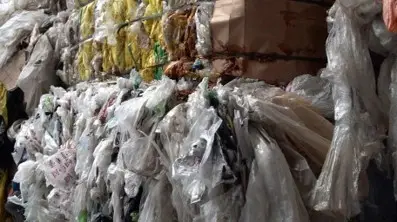
California collects far less flexible plastic than it would need to meet its 2032 recycling target, but collection is only part of the problem. The state generates roughly 550,000 tons of flexible film from homes each year, while current buyers can take only about one-tenth of that material. Finding products that can use recycled film at scale is the next step.
This is a broader challenge for packaging recovery. Crisp packets, pouches and bread bags can be collected and processed, yet they won’t become new products unless manufacturers want the resulting material. If collection grows faster than demand, the surplus piles up in storage or ends up being discarded. A functioning recycling supply chain needs dependable buyers as well as collection routes and processing capacity.
The gap extends beyond California. In the United States, film and flexible packaging waste has risen 15% since 2020, while only about 2% of households have access to collection, processing and end markets for it. In the UK, around one in six local authorities collects plastic film for recycling. Across both newer and more established producer responsibility systems, demand for recycled household flexibles remains a constraint.
Why buyers have held back
Companies that reclaim plastic turn collected material into resin that manufacturers can use. They need confidence that buyers will take that resin before investing in equipment and capacity. For household polyethylene film, that confidence has been scarce: fewer than 30 reclaimers in North America recycle it, fewer than half accept material from households, and many make plastic lumber or asphalt additives.
Household film presents technical and cost challenges. It can combine different colours and plastic types, and arrive with food residue, labels, adhesives or paper attached. Manufacturers can often choose virgin plastic or cleaner film from commercial sources instead. Matching virgin plastic’s price may not be enough to persuade them to switch: recycled household film may need to cost substantially less.
Some European markets use producer fees to help close that price gap. With that support, household film can sometimes sell for less than half the cost of virgin plastic. North American markets may also need a way to bridge the difference, but designing effective support depends on understanding which products can actually use the material and what it will cost to make them.
Eight product opportunities
A study by Delterra and Eunomia examined possible uses for recycled household film. Researchers interviewed more than 20 industry experts and assessed over 40 applications, including flowerpots and car parts. They looked at whether a production trial would add new evidence in North America, how much converters and reclaimers would need to change their processes, and how much material each product might absorb.
The assessment set aside uses already established commercially in the United States and Canada, including plastic lumber and roof coverboard. The most promising applications shared practical advantages: they don’t involve food contact, can accommodate colour differences and small imperfections, and can use a variable mix of polyethylene types.
Eight applications emerged as leading candidates:
- Horticulture liners, trays and pots
- Rigid housewares
- Transit packaging pallets
- Rotational-moulded products, including bins and large containers
- Industrial liners
- Impermeable construction membranes
- Heavy-duty agricultural covers
- Dark-coloured trash bags
Depending on the product, recycled household film could make up 5% to 70% of the material. Together, the eight applications could absorb about 800,000 tons of recycled household polyethylene film annually. Three uses—industrial liners, construction membranes and dark trash bags—account for roughly three-quarters of that estimated potential, or about 600,000 tons.
That concentration has a practical implication. The largest potential markets are film products, which are harder to manufacture with recycled household material than many rigid items. Easier applications may provide useful early outlets, but they cannot account for most of the estimated demand. Scaling recycling will require progress on products that present tougher manufacturing challenges.
Trials must turn estimates into orders
Potential demand is not yet a functioning market. Production trials in factories need to show whether the material performs as required, whether finished products meet quality expectations, and how much it costs to substitute recycled resin for virgin plastic. Those results can identify technical obstacles and clarify how much financial support might be needed to make the switch viable.
For manufacturers, reclaimers and converters, early trials can build familiarity with a feedstock that remains difficult to handle. They can also establish working relationships and give businesses direct information about supply, product quality and costs. That experience will help companies assess how household film could fit into their production plans.
California’s stated target is a 65% recycling rate for single-use plastics by 2032; currently, less than 5% of the state’s flexible plastics are recycled. Expanding collection alone cannot close that distance when current end markets can use only a fraction of the film generated. The next measure of progress will be whether factory trials lead to products and dependable orders that give collected bags and wrappers somewhere to go.