DNV and Wison Engineering Pair Delivery Skills With Independent Assurance
DNV and Wison Engineering will combine EPC delivery with independent technical assurance, targeting hydrogen, ammonia, CCUS and sustainable aviation fuel projects.
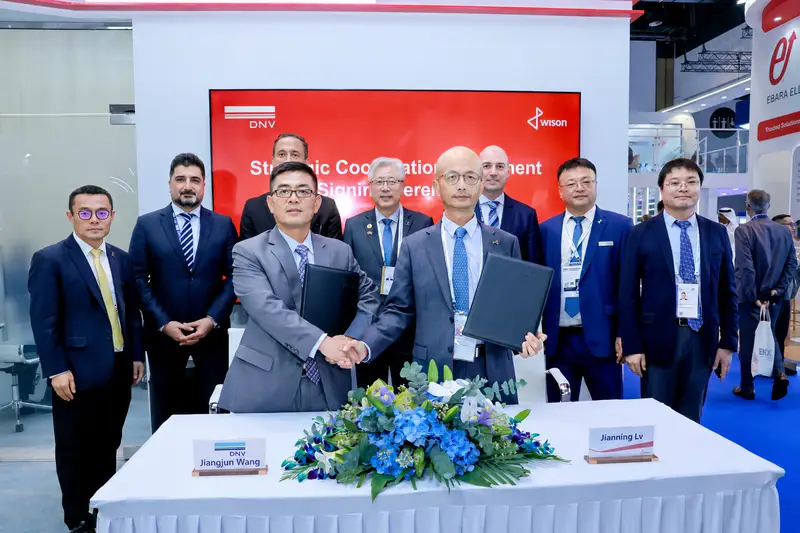
The interesting part of this tie-up isn't the handshake. It's the division of labour. Wison Engineering builds and delivers projects, while DNV checks them independently. Putting those two functions under one strategic cooperation agreement points to a view that's gaining ground in energy: execution risk is now as much a quality-assurance problem as an engineering one.

Cap Jiangjun Wang, Country Manager, Greater China, Industrial Services at DNV, and Lv Jianning, VP, Wison Engineering, signed the agreement in the presence of Mohamed Houari, CEO, Industrial Services at DNV, and Zhou Hongliang, CEO, Wison Engineering. Source: DNV
What the agreement actually covers
Norway-based DNV, an assurance and risk management company, and China's Wison Engineering have signed a strategic cooperation agreement. The stated aim is to improve quality, manage risk and build confidence across energy projects worldwide. The deal is framed as a long-term framework rather than a single project contract, and it spans three working areas: engineering project support, independent inspection, and supplier quality management.
Two of those areas matter most to me. Independent inspection is where an outside party checks work that the builder is doing, and supplier quality management addresses the equipment and materials that arrive from dozens of sub-tier vendors. Projects often slip or overrun because a single component from a single supplier fails qualification late in the schedule. Bringing assurance into the supply chain earlier is a sensible response to that pattern.
Why the pairing makes sense on paper
Wison Engineering brings engineering and EPC (engineering, procurement and construction) capabilities. DNV brings independent technical assurance and risk management. The two roles are distinct, and that's the point. An EPC contractor is accountable for delivering the asset, while an independent assurance provider is accountable to a different standard: showing that the design, the materials and the execution meet recognised requirements.
Wison's Lv Jianning and DNV's Cap Jiangjun Wang signed the agreement, with the two CEOs present. Mohamed Houari of DNV Industrial Services and Zhou Hongliang of Wison Engineering were also there, which signals that the agreement sits at senior management level on both sides rather than sitting inside a single regional team.
Where the technology focus lies
The agreement names hydrogen, ammonia, carbon capture, utilisation and storage (CCUS), and sustainable aviation fuel (SAF) as areas to explore. These are the newer process industries that the energy transition is pushing into, and they carry different technical risk from conventional oil and gas or petrochemical work.
Hydrogen and ammonia plants bring high-pressure operations, specialised materials and novel process configurations. CCUS adds capture units, compression, transport and storage, which means connecting many systems that were designed separately. SAF production typically involves converting feedstocks through processes that many operators haven't run at commercial scale. In all three cases, teams in this position typically find that the first projects are where most of the lessons, and most of the cost overruns, come from. Independent review at the design and procurement stages is one way to catch those problems before they reach the construction site.
What's not yet clear from the announcement is which specific projects will come first. The companies say they plan to turn the agreement into concrete projects and initiatives, but no named sites or timelines have been disclosed. That's a reasonable position for a framework deal, though it means the real test is still ahead.
Supply chains and data-led quality
The collaboration also covers global supply-chain quality. That includes supplier assessments, audits, capability building, and data-led approaches to quality improvement. Here's the thing: supplier audits have long been a paper exercise in many projects. A shift toward data-led quality means tracking supplier performance across multiple projects and feeding that information back into procurement decisions. If it works, it could make quality a measurable input rather than a checkbox.
That said, the value depends on whether the data is shared consistently across the supply chain. Suppliers have to be willing to provide records, and buyers have to act on what the records show. Those are operational questions the announcement doesn't answer yet.
A related move in well integrity
DNV has also agreed to acquire WellSpot from Equinor. WellSpot brings well data, analysis and standardised workflows together so that operators can track and manage accumulated fatigue damage over the life of a subsea well. That's a different corner of the business, but it fits the same pattern: taking data that used to sit in separate spreadsheets and turning it into a single view that supports decisions about asset integrity. The WellSpot deal shows where DNV's assurance work is heading as operators look for more structured information about ageing assets.
What to watch next
My read is that the agreement's real significance will show up in project files rather than press releases. Three things would tell us whether it's working: which first projects get named, whether the independent inspection role is written into contracts, and whether the supplier quality work produces data that buyers actually use. The energy transition is pushing more first-of-a-kind projects into the pipeline, and the companies that can show credible quality control on those projects will likely find it easier to win the next round of work. Keep an eye on the first named project, because that's where this framework either becomes practice or stays a good intention.