EnQuest Sells Its UK North Sea Business to NEO NEXT+ and Turns Fully Toward Southeast Asia
EnQuest will sell its UK upstream business to NEO NEXT+ for up to $960 million, sharpening its focus on Southeast Asian assets.
EnQuest is stepping back from the North Sea entirely. The company has agreed to sell its UK upstream business and associated infrastructure to NEO NEXT+ Energy, an independent UK oil and gas producer, for total consideration of up to $960 million. The sale is a clear signal that EnQuest sees its future in Southeast Asia, and that the North Sea fields it built its name on are now a secondary priority.

The deal terms
The headline figure breaks into two parts. EnQuest would receive $840 million in upfront cash on completion, subject to customary closing adjustments including working capital. On top of that sits up to $120 million of contingent consideration, which pays out only if certain conditions are met. The transaction is structured as a sale of all the issued shares of EnQuest Britain, the subsidiary that holds the UK upstream assets through its own subsidiaries.
The economic effective date is January 1, 2027, and completion is expected in the first quarter of that year. Several conditions have to be satisfied first. The buyer also needs lender consent under EnQuest's reserve-based lending facility and must replace the UK decommissioning security agreements that currently sit with EnQuest. Anyone tracking North Sea transactions will recognize that decommissioning security is often the item that takes the longest to resolve, so the replacement arrangements are worth watching.
Why the Southeast Asia pivot matters here
The sale doesn't stand alone. It is the second half of a repositioning that includes EnQuest's acquisitions of participating interests in four production sharing contracts (PSCs) in Malaysia. Those Malaysian acquisitions are expected to complete on December 31, 2026, and they're the reason the UK sale makes strategic sense in the first place. EnQuest is consolidating its capital and management attention in one region rather than running two separate hubs.
That approach has a logic that's common in mature offshore portfolios. Operators with a large base of aging North Sea fields often face high unit costs, heavy decommissioning liabilities and limited room for growth. Moving capital toward assets with lower operating costs and existing infrastructure can make a balance sheet easier to manage, even when the total barrels involved are modest. Here's the thing, though: that only works if the receiving region can deliver the growth it promises, and EnQuest is betting that Southeast Asia can.
What the remaining portfolio looks like
EnQuest's figures for the post-deal business, calculated on a 2025 net participating interest basis, show a much leaner profile. The company expects the remaining portfolio to produce around 70,000 barrels of oil equivalent per day (boe/d) from Southeast Asia, with unit operating costs of about $11/boe. That compares with $25/boe in 2025, a reduction of roughly 57%. On those numbers, the company puts pro forma EBITDA at around $500 million.
Production has already moved in the right direction. EnQuest says output grew in 2026 with the addition of low-cost gas volumes from the Seligi 1b field. The company is emphasizing capital-efficient growth, particularly opportunities that use existing infrastructure. Its Southeast Asian investment is focused on production enhancement with minimal new infrastructure, which is a different proposition from building new hubs from scratch. Enhanced oil recovery and recovery factor improvement are the main levers it cites, along with converting 2C contingent resources into reserves.
After completion, EnQuest plans to use the proceeds to repay debt drawn for the Malaysian acquisitions while keeping liquidity for organic growth and further deals across the region. The company describes its upstream portfolio as 97% operated on a 2P basis in Southeast Asia, which gives it direct control over timing and spending on most of its assets.
What changes for the North Sea assets and people
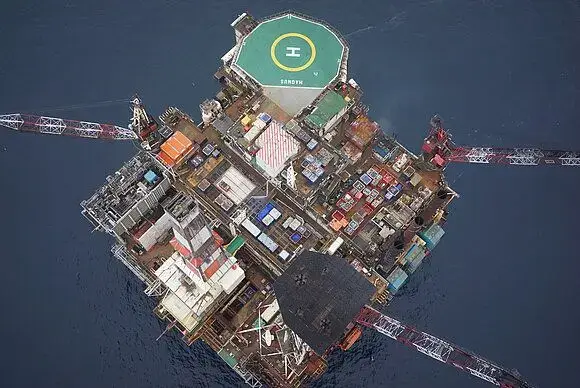
The divestment covers a substantial UK portfolio. It includes the Magnus and Kraken fields, the operated Greater Kittiwake Area, the non-operated Golden Eagle field, the undeveloped Bressay field and the Bentley discovery. EnQuest's UK upstream assets produced an average of 31,122 boe/d net in 2025, with the mix running about 92% liquids and 8% gas. At the end of that year, the portfolio held approximately 122 million boe of 2P reserves and 308 million boe of 2C resources.
The package also includes midstream and decommissioning-related assets: EnQuest's operating interest in the Sullom Voe Terminal, the Northern Leg Gas Pipeline and the Ninian Pipeline system. Employees who support these operations will move to the new owner as part of the transaction. EnQuest has said it wants an orderly handover, and it has committed to working with NEO NEXT+, employees and joint venture partners to get there. For the people on these platforms and terminals, the practical question is continuity of roles and terms, and the transfer mechanism is the detail that will matter most.
What to watch next
Three things will tell us whether this works as planned. The first is whether the Malaysian acquisitions close on schedule at the end of 2026, because the UK sale depends on them. The second is whether the conditional part of the consideration gets paid, which will depend on how the North Sea assets perform under new ownership. The third is whether EnQuest can deliver on its Southeast Asian growth targets, especially the unit cost reduction, since much of the financial case rests on it.
For the broader North Sea, the deal is one more example of mature assets changing hands as operators shift capital elsewhere. Those transfers can keep production running and fund new investment, but they also put decommissioning obligations and infrastructure responsibilities in new hands. My read is that the decommissioning security replacement and the handling of shared infrastructure like Sullom Voe will shape how smoothly this transition goes, more than the headline price.