Material Footprint Targets Could Put Resource Demand at the Center of Circularity
Janez Potočnik says recycling needs to be paired with lower material demand, better measures and fairer resource use.
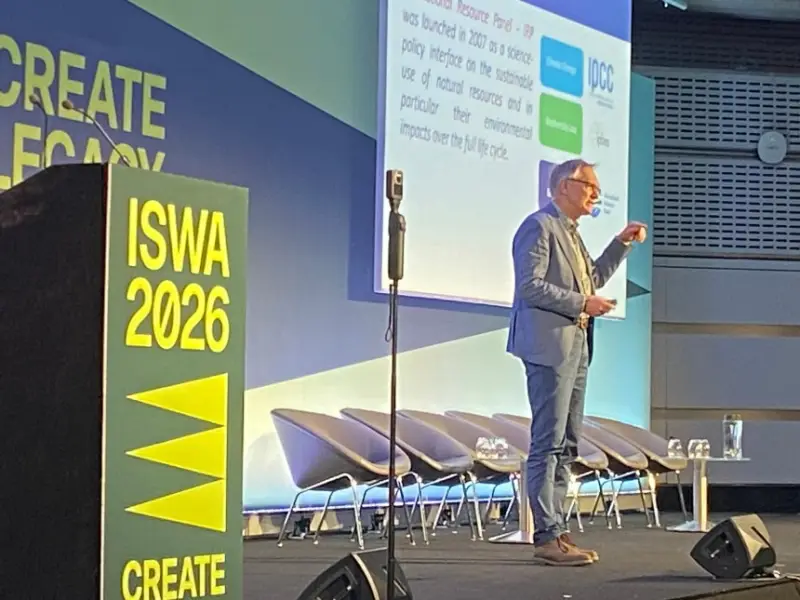
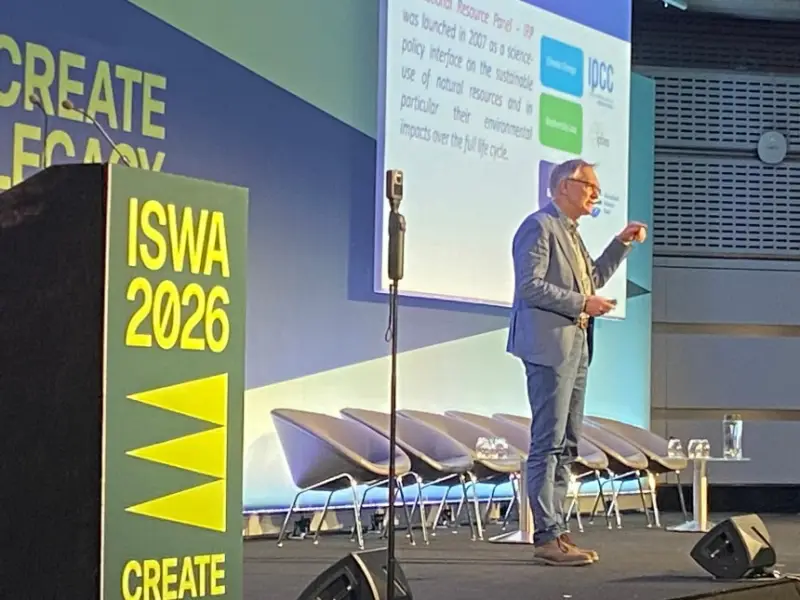
Recycling can recover materials, but it cannot keep pace on its own when demand keeps rising. At the ISWA World Congress in London on 9 November, former European Environment Commissioner Janez Potočnik argued that circular economy efforts should measure and reduce the materials used to meet people’s needs, alongside expanding recycling.
That shift matters for both resource security and climate goals. Energy and digital technologies are increasing reliance on metals and minerals, while the transition to different energy sources does not automatically make production less resource intensive or ensure that materials are shared fairly. Potočnik, Co-Chair of the International Resource Panel, called for a broader change in how economies provide services such as mobility and housing.
Why recycling has a limit
Recycling returns some material to use, but the supply available for recovery is constrained by what has already been produced and discarded. When demand grows quickly, recovered material may cover only part of the need. Potočnik used batteries to make the point: recycling the batteries available today would not be enough if many more were needed in the future.
He described recycling as essential, while questioning whether it can serve as the main answer in a growing economy. It can contribute more readily when material needs and supply are relatively stable. Where demand is expanding, reducing the quantity of material needed in the first place becomes part of the equation.
“Many examples of circular economy practice are encouraging, but to make circular economy a norm, we need a system change.”
That means looking beyond the efficiency of individual products to the systems around them. A more efficient car can use less energy or material per vehicle, but a mobility system that meets people’s needs with fewer cars may reduce the total demand for vehicles and the resources they require. Potočnik summed up the distinction this way: “We don’t need cars, we need mobility. We don’t need light bulbs, we need light.”
For businesses, this framing puts product life, repair, reuse and shared use alongside recycling. It also asks companies to consider whether a service can be delivered with fewer physical goods. The practical options vary by sector, but the underlying measure is the total material demand associated with meeting a need, rather than the recycled content of a single product.
Measuring the material footprint
Potočnik questioned whether Europe’s circular material use rate is a useful headline measure of progress. The rate compares recycled materials with total material use. In his view, that makes it a downstream indicator: it describes how much material returns to the economy, but does not directly show whether total consumption is falling.
The European Environment Agency reports that recycled materials accounted for 12.2% of EU material use in 2024, up from 10.7% in 2010. It says the EU is not on track to double the rate by 2030, or to meet the 24% figure set out in the Clean Industrial Deal. These numbers show a gradual increase, while also illustrating the distance between current performance and the stated ambition.
Potočnik argued for material footprint measures that account for the materials associated with consumption. Such measures could make the demand side more visible to businesses and decision-makers, including materials used along supply chains. “It will provide all stakeholders with a clear message that the level of materials consumed in Europe is a problem,” he said.
He identified the forthcoming EU Circular Economy Act as an opportunity to reshape the framework. The European Commission says the initiative is intended to establish a single market for secondary raw materials, increase the supply of high-quality recycled materials and stimulate demand for them. Those aims could support reuse of recovered materials; Potočnik’s argument is that demand reduction should also feature in how progress is assessed.
Resource use and fairness
Lower material demand has a strategic dimension for Europe because dependence on imported resources can leave supply exposed to disruption. But a single global approach to reducing use would miss large differences in current consumption and unmet needs.
The International Resource Panel’s Global Resources Outlook 2024 found that high-income countries use six times more materials per person and generate ten times the climate impacts of low-income countries. Potočnik said high-income countries with large stocks of materials should reduce their footprints, while lower-income countries still need more resources to meet essential needs. Building circular practices into new infrastructure and services can help limit waste as those needs are met.
This distinction makes the design of targets important. A measure that tracks only recycling can reward recovery without showing whether total material use is changing. A footprint measure can help reveal consumption patterns, but it must also account for differences in income, existing infrastructure and access to essential services if it is to describe a fair transition.
Data and incentives for change
Potočnik outlined four priorities: national material-use targets, better measurement of circularity, incentives that reward responsible resource use, and greater transparency and coordination. Together, these would connect how materials are measured with the choices that shape demand and the recognition given to businesses that meet needs with fewer resources.
He also pointed to work on a proposed global materials data hub. UNEP, the International Chamber of Commerce and Mining 2030 are examining user needs and possible governance arrangements, including the possibility of an international materials agency. The ICC has separately confirmed that it and its partners are exploring a hub to bring together existing open-access information on material flows and their impacts.
Reliable, comparable information would help clarify where materials enter supply chains, how they are used and where recovery is possible. The next test is whether such measures change the signals businesses respond to. Potočnik’s central point is that a circular economy depends not only on recovering materials after use, but on rewarding ways of delivering mobility, housing and other services with less material demand.