AI and Waste Research: Why Verification and Local Context Matter
Waste and circularity experts urge careful AI use, source verification and solutions shaped by local infrastructure and working practices.
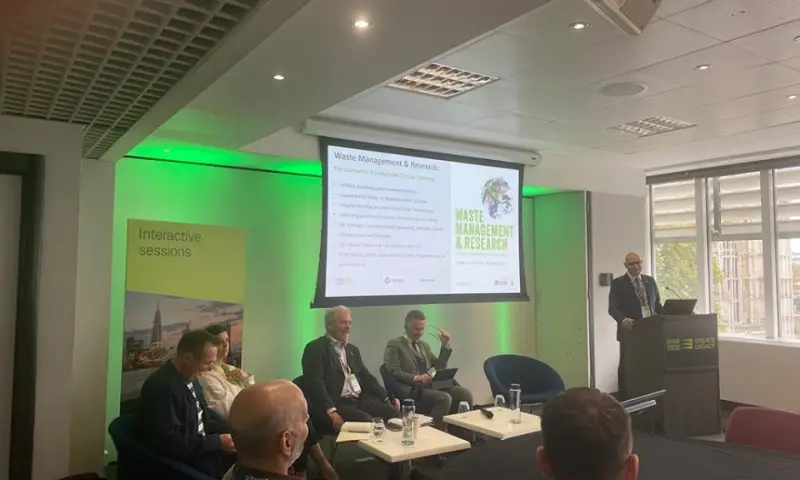
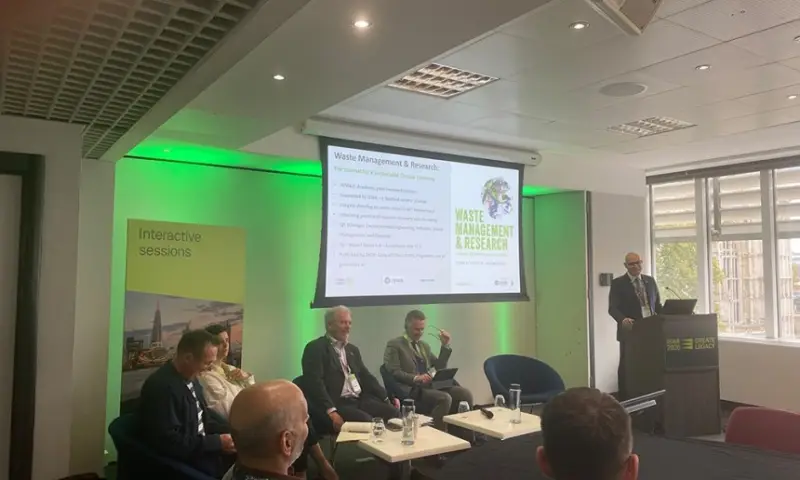
For waste and circularity research, artificial intelligence can speed up access to information, but it can also make weak claims harder to spot. At a panel on publishing waste and circularity science during the second day of the ISWA World Congress 2026, researchers and practitioners argued that people still need to check evidence, ask better questions and judge whether proposed solutions fit local conditions.
AI changes how research is found and trusted
Dr Costas Velis opened the discussion by describing how AI is changing scientific research and the way information is understood. Large language models such as Claude and ChatGPT can produce fluent answers, but fluency alone doesn’t establish that an answer is accurate or that its evidence supports the conclusions.
Prof Mario Grosso of Politecnico di Milano pointed to a related concern: LLMs can be sycophantic, tending to agree with the person interacting with them. That tendency matters when a user is trying to test an assumption. A system that echoes a premise can make a weak argument feel more convincing without adding reliable support.
Velis asked how researchers and readers can assess the accuracy and truthfulness of scientific information, and what tools they have to do so. The question goes beyond checking whether a generated answer sounds plausible. Readers need to follow claims back to their evidence, consider the limits of that evidence and distinguish a useful guide to sources from a substitute for research.
CIWM’s Dan Cooke described an information environment in which emotional appeals can outweigh facts and people increasingly consume short snippets while expecting immediate answers. “AI is creating a fog that is concealing the truth,” he told delegates. In this setting, speed and volume can make it harder to see which claims are well supported.
Use AI to find information, then examine it
Circular economy expert Mark Shayler, host of ISWA 2026, said he worries that AI can make users less diligent. He drew a distinction between using it as an indexing system and relying on it to do the work of research or form an opinion. The first can help people navigate material; the second risks skipping the effort needed to judge what that material shows.
“We have knowledge and tools to interrogate information,” Shayler said. “We’re the problem, we’ve become idle and lazier as the tools are so powerful, but the power comes with responsibility.” His point is practical: a generated response can be a starting point, but users still have to check its sources and reasoning before carrying its claims into research or practice.
That discipline matters in waste management, where the appeal of AI can encourage people to treat it as an answer to problems that require very different kinds of work. Better measurement and analysis may help some systems, but technology alone doesn’t determine whether a service is affordable, maintainable or suited to the people expected to use it.
Local waste systems call for local solutions
Maya Zaatar of the Royal Borough of Greenwich, who has worked as a practitioner in more than 25 countries in the Global South, emphasized that waste itself is familiar across places while the systems for managing it differ. For countries still building basic waste infrastructure, she said, measurement may not be the first priority. Simple, low-cost tools for managing waste can be more useful than adding AI technologies.
That distinction is important for people deciding where limited time and resources should go. Data collection and advanced analysis have value when they help address a defined need, but they don’t replace basic services. Solutions need to reflect what infrastructure already exists, what communities require and what can be sustained in practice.
Zaatar also cautioned that research findings may not transfer neatly from one place to another. Local context should guide decisions, and circularity shouldn’t be treated as a single model. In many places, she said, circular practices are already part of daily life. Their forms vary by geography, and that variety should be recognized rather than forced into one template.
Slow down and make responsibility clear
As the panel turned to what comes next, Cooke argued that people can use their existing skills to verify sources and identify trustworthy guides through the flood of new information. Shayler called for slowing down and asking better questions, including who is responsible for identifying and sharing useful papers and information.
A transparent, reliable way to find and assess research would help readers make better use of AI tools. The practical test for waste and circularity work is whether information can be checked and whether the proposed response fits the place where it will be used. As AI becomes more common in research, careful verification and attention to local needs remain essential parts of the work.