ExxonMobil Advances Guyana’s Longtail Offshore Project With Saipem and SBM Offshore Awards
Longtail adds a major subsea contract and a high-capacity gas-processing FPSO to Guyana’s Stabroek development, where installed capacity has reached 1.1 million barrels per day.
Guyana’s Longtail development is moving into execution with two major awards: Saipem will deliver subsea infrastructure valued at an estimated $1 billion to $1.5 billion, and SBM Offshore will build and install a floating production, storage and offloading vessel (FPSO). The project adds another large offshore development to the Stabroek block, where installed oil production capacity has reached 1.1 million barrels per day following the start-up of Uaru.

The scale of Longtail stands out for its gas-handling requirements. Its FPSO is designed to process 1.2 billion standard cubic feet of gas per day and 250,000 barrels of condensate per day. At a water depth of about 1,750 meters, the vessel is expected to store roughly 2 million barrels of condensate. Those specifications make gas processing a defining part of the project’s offshore infrastructure.
Subsea work moves into execution
Saipem has received authorization to proceed with the remaining work on the Longtail subsea assignment. The contract covers engineering, procurement, construction and installation of the subsea structures, umbilicals, risers and flowlines, collectively known as the SURF system. Its expected duration is around four years.
The award follows ExxonMobil’s final investment decision for the project and the earlier limited notice to proceed Saipem received in April 2026. That initial notice allowed preliminary detailed engineering and procurement of equipment with long manufacturing lead times to begin. With the latest authorization, Saipem can continue into the rest of the contract scope.
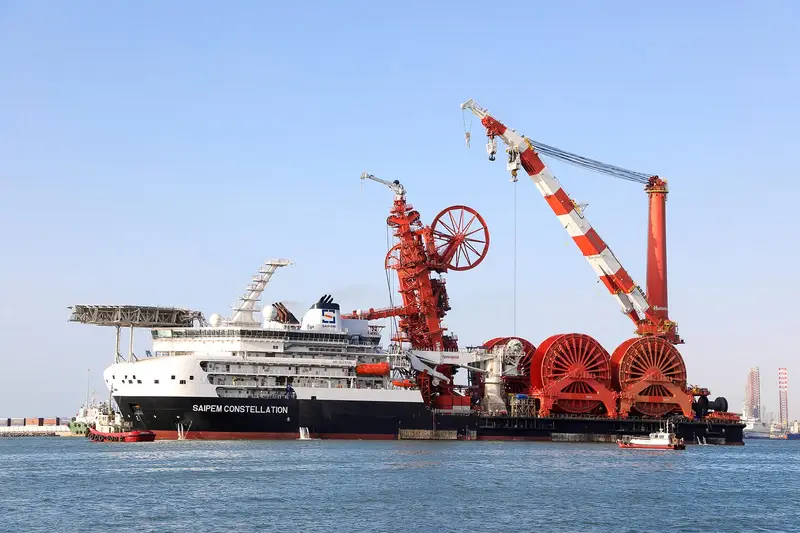
Work will draw on Saipem’s offshore fleet, including FDS2, Castorone and Constellation. Fabrication is planned at the company’s yard in Arbatax, Sardinia, while the Vreed-en-Hoop Shorebase Inc. yard in Guyana will support logistics. The work is also expected to involve local suppliers and resources, connecting an international offshore project with Guyana’s service base.
Longtail is Saipem’s eighth offshore development contract from ExxonMobil Guyana in the Stabroek block. The company’s earlier awards covered Liza Phase 1 and Phase 2, Payara, Yellowtail, Uaru, Whiptail and Hammerhead. That sequence points to a continuing role for the contractor as the block’s projects progress from development plans into construction and installation.
A new FPSO built around gas processing
SBM Offshore’s award covers construction and installation of the Longtail FPSO, which the company expects to operate for an initial period of ten years. The award followed completion of front-end engineering and design studies and the project decision by ExxonMobil and its block co-venturers.
The vessel will use SBM Offshore’s Fast4Ward design program and its tenth new-build multipurpose floater hull. The company describes the program as a standardized approach to FPSO design and delivery. For Longtail, the main engineering challenge described by the companies is the required gas-handling capacity, which SBM says will be the highest yet deployed on an FPSO.
SBM Offshore has five FPSOs already operating in the Stabroek block: Liza Destiny, Liza Unity, Prosperity, One Guyana and Jaguar. Longtail would be its sixth FPSO award from ExxonMobil Guyana. The company says experience from the existing vessels will inform the new project’s design and operations.
SBM also says it plans to expand work with Guyanese companies, source fabrication work locally and recruit Guyanese engineers into project execution and operations teams. Those commitments indicate where some of the project’s local economic activity may sit: in supply, fabrication and technical roles tied to building and running the vessel.
Longtail within the Stabroek build-out
ExxonMobil Guyana operates the Stabroek block and holds a 45% interest. Hess Guyana Exploration, part of Chevron, holds 30%, and CNOOC Petroleum Guyana holds the remaining 25%. The latest awards follow Uaru’s start-up, which brought installed production capacity in Guyana to 1.1 million barrels per day.
That capacity figure describes installed production capability; it does not, by itself, establish actual output at any given time. Longtail’s stated design figures likewise describe the planned FPSO’s processing and storage capabilities, rather than a forecast of sustained production. The distinction matters when comparing project specifications with national production levels.
Longtail’s next phase will test how the subsea system, deepwater installation work and high-capacity gas processing come together on a four-year construction schedule. Its progress will also show how much of the fabrication, logistics and engineering activity can be carried out with Guyanese companies and workers. For the Stabroek block, the awards turn another large development from design into delivery.