Purus Vortex Brings Methanol-Ready Damen Design to North Sea Wind Work
Damen's first CSOV for Purus, Purus Vortex, is sailing to IJmuiden with hybrid propulsion and methanol-ready systems for North Sea offshore wind service.
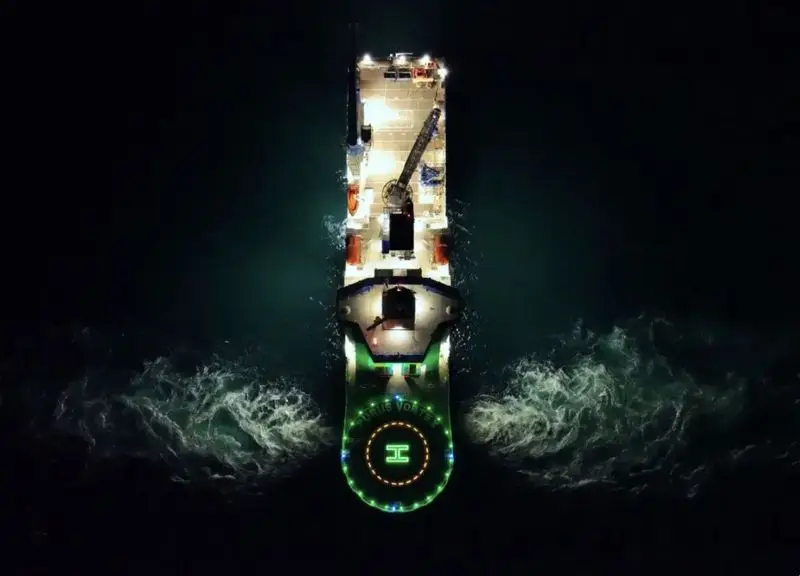
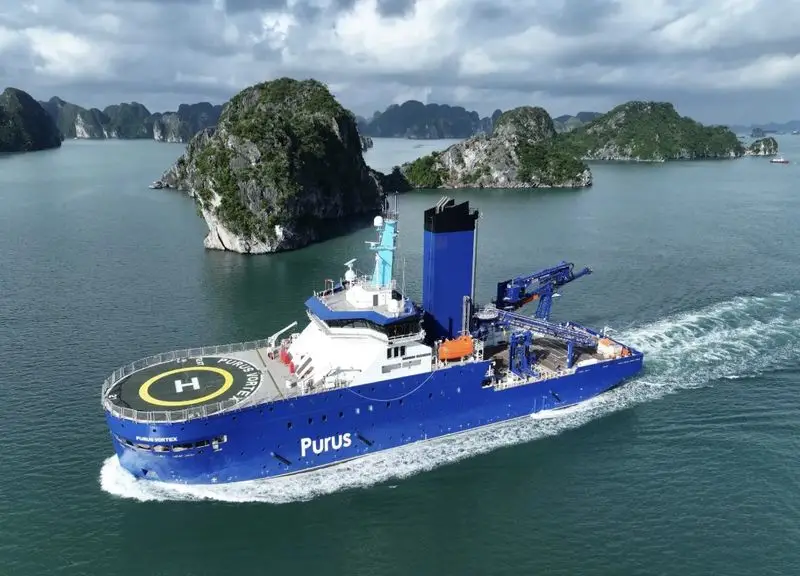
Damen Shipyards Group has handed over the 90-meter commissioning service operation vessel Purus Vortex to Purus, and it's the first CSOV from Damen to join the company's fleet. That matters because Purus has so far built its renewables support capacity around vessels from Vard. Adding a Damen hull gives the operator a second yard and a second design family to work with as its offshore wind commitments grow.

The vessel was completed at Damen's Ha Long shipyard in Vietnam. It has since left Vietnam and is sailing to the Netherlands, where it will operate from IJmuiden in support of an offshore wind project in the North Sea. Damen did not name that project, so the specific wind farm remains unconfirmed.
Power and fuel: built for today, ready for methanol
Here's the thing about this ship: its propulsion is hybrid diesel-electric today, but the engines and systems are prepared for future operation on methanol. For an operator thinking about fleet fuel choices over a vessel's working life, that kind of readiness is a real asset. Retrofitting fuel systems and engines is expensive and disruptive, so designing for a later switch at the build stage tends to keep options open without locking in a fuel path too early.
A battery array sits alongside the diesel-electric system and is used for peak shaving. In practice, batteries can absorb short bursts of high demand so the generators run closer to a steady, efficient load. That reduces fuel burn during variable operations, which is exactly the kind of work a CSOV does, moving between turbines and holding station while technicians transfer across.
Damen also says the vessel may be fitted with offshore charging equipment in the future. The source doesn't go into detail on what that would involve, so it's best read as a provision for later rather than a capability on delivery.
Station-keeping and manoeuvring
Purus Vortex uses Damen's DPX-Drive system, with four independently operated azimuth thrusters, two at the bow and two at the stern. Independent thrusters give the crew fine control when holding position alongside a turbine foundation or a substation, where wind and current can change quickly. Damen says the arrangement, combined with an optimized hull, supports manoeuvrability and station-keeping while lowering fuel consumption and underwater noise.
Underwater noise is worth watching in the wind sector. Operators and project developers increasingly pay attention to vessel acoustics, since marine life around construction and operating sites is sensitive to sound. A hull and thruster layout that reduces noise as a design feature, rather than an afterthought, is a practical benefit for projects working under environmental conditions.
Accommodation and transfer equipment
The ship can accommodate up to 120 people, including crew and offshore personnel, which puts it in the same class as the Vard-built vessels already in Purus's fleet. Those Vard sisters, Purus Chinook and Purus Coriolis, are based on Vard's 4 19 design and share the hybrid propulsion approach and the 120-person capacity. Purus Chinook was delivered in 2025 and Purus Coriolis in March 2026.
For the people aboard, the practical features are the ones that shape a 30-day rotation. Purus Vortex has a certified helipad, a motion-compensated gangway for personnel transfers and a motion-compensated crane for handling equipment. Damen also fitted a large anti-roll tank to improve stability during offshore stays of up to 30 days. Stability over a month at sea affects comfort, seasickness and, in the end, how safely technicians can work. Gangway and crane motion compensation also reduce the time windows lost to rough seas during transfers.
Where this fits in Purus's fleet
The delivery follows a run of handovers from Damen to Purus, including hybrid fast crew suppliers. Purus Vortex is the first CSOV from the shipbuilder to join the fleet, so it marks a step beyond the crew transfer vessels into the heavier, longer-duration offshore support category.
Purus is also spreading its vessels across different kinds of work. Earlier this year, its construction service operation vessel Purus Power was chartered by the joint venture between RWE and TotalEnergies for the OranjeWind offshore wind farm in the Netherlands. In September, Siemens Gamesa and Purus signed a long-term charter agreement for the service operation vessel Purus Horizon, which will support the turbine maker's offshore operations and maintenance work in the North Sea. Siemens Gamesa and Purus signed a long-term charter agreement for that vessel, which is one of the clearer signals of how the O&M side of the market is contracting for vessel capacity.
What to watch next
My read is that the real test for Purus Vortex will come in its first operating seasons at IJmuiden. Hybrid systems and battery peak shaving look good on paper, but fuel savings and noise reductions show up in logged operating data over time. Whether the methanol readiness turns into an actual fuel switch will depend on fuel availability, bunkering arrangements and the economics at the time, none of which the shipbuilder's announcement settles.
For now, the delivery adds a second design family to a fleet that is clearly being built for multi-year offshore wind work. If the ship performs as described, it gives Purus a template that can be adapted as North Sea projects demand more capacity and lower-emission operation.