Lewis Hub Construction Begins on 1.8 GW Western Isles Power Link
Work has started on the Lewis converter hub, a key part of an 1.8 GW link connecting the Western Isles to the mainland electricity network.
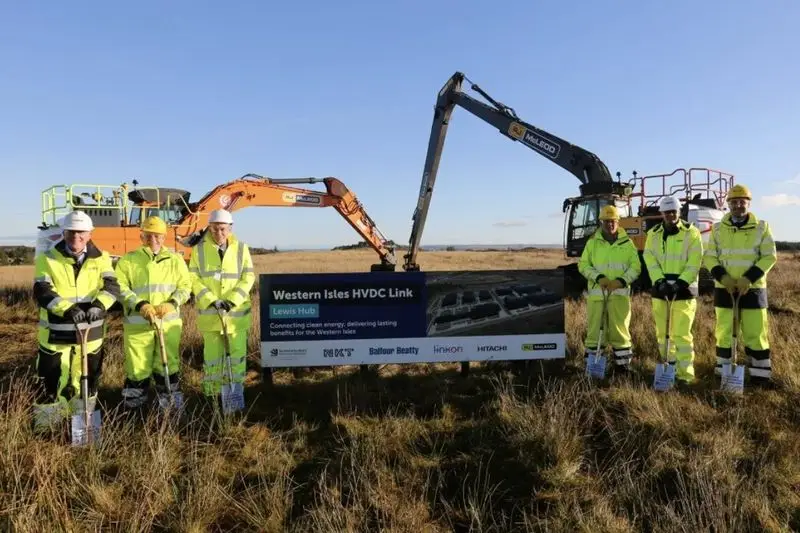

Construction of the Lewis Hub marks a shift from preparing the site to building the equipment that will connect the Western Isles to the mainland electricity network. The hub, planned for Arnish Moor near Stornoway, is a central element of the Western Isles HVDC Link, a proposed 1.8 GW connection between the Isle of Lewis and the mainland.
The construction milestone was marked on November 5. Highlands-based contractor RJ McLeod signed a contract that same week to carry out the first major package of works, preparing the site for a high-voltage direct current (HVDC) converter station, an alternating current (AC) substation and related infrastructure.
Why the converter hub matters
The link is designed to move electricity between Lewis and the mainland through two cable sections: approximately 83 kilometres underground and 81 kilometres beneath the sea. At Lewis Hub, the converter station will connect the HVDC cable system with the local AC network infrastructure. That conversion is central to making a long-distance direct-current link work alongside the wider transmission system.
The planned 1.8 GW capacity sets the scale of the connection. For the Western Isles, it creates a route for electricity that can be produced locally to reach the mainland network. For the wider system, an additional connection can strengthen the links between regions and give renewable generation another route to reach electricity users. The actual contribution will depend on generation coming online, the link’s operating performance and the capacity available across the connected network.
SSEN Transmission describes the connection as an ambition pursued for decades. Sandy Mactaggart, the company’s director of offshore delivery, said the hub and wider connection are intended to unlock the islands’ renewable energy potential and strengthen the electricity network. Those aims depend on completing the converter facilities and the full cable route as a coordinated system; the hub is a major step, rather than the finished connection.
Cable and equipment contracts
Hitachi Energy is delivering the HVDC converter stations, while NKT is supplying the power cable system. NKT said its contract covers the complete 525 kV system, including design, production, installation and testing across both the onshore and offshore sections.
That scope reflects the practical demands of a link that combines buried land cable, subsea cable and converter equipment. Each part must be installed and tested so power can pass through the route as intended. The announcement provides the route lengths and capacity, but does not set out a completion date or describe the sequence and timing of each remaining construction stage.
The connection sits within SSEN Transmission’s planned £22 billion programme to upgrade the north of Scotland’s electricity transmission grid. The Western Isles link is therefore one part of a wider network buildout, with its value tied both to island generation and to the mainland infrastructure that carries electricity onward.
Local opportunities and next steps
SSEN Transmission expects the Lewis Hub work to support more than 70 apprenticeship and trainee opportunities. The company has also announced a £1.06 million Lewis Hub Local Fund, approximately €1.27 million, which is due to launch soon. It says the fund is intended to support the local community, alongside efforts to develop skills and create opportunities for local businesses.
Future local funds linked to proposed transmission projects in the Western Isles could bring total community benefit funding above £5 million. That figure is conditional: the associated projects must secure consent and progress to main construction. The announced total is therefore a potential contribution across multiple projects, not a guaranteed payment from the Lewis Hub alone.
For island communities, construction offers near-term work and training prospects, while the larger promise is a stronger route for electricity from the Western Isles. Turning that promise into a working connection will require the hub, cable system and related network works to come together. The next meaningful measure will be progress across those linked components and the availability of generation to use the capacity the connection is built to provide.