BYD Seal 07 Brings Longer Range and Faster Charging at a Lower Price
The Seal 07 pairs 775 km of stated range and rapid charging with a lower starting price, amid a growing field of Chinese electric sedans.
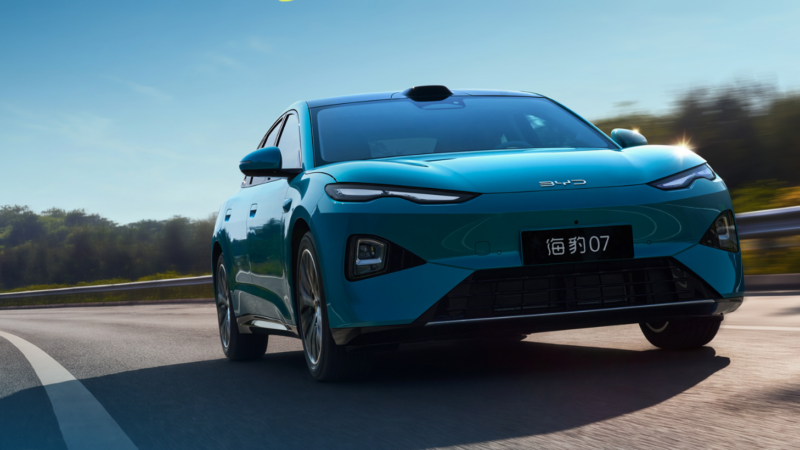
BYD’s Seal 07 shows how quickly the value equation for electric sedans has shifted in China. The new model is larger and better equipped than the Seal that arrived in 2022, yet its starting price is lower. It also pairs a smaller battery with more stated range, more power and much faster charging. Those gains place it in a crowded segment where buyers can choose among several BYD models as well as competitors’ sedans.

More room and equipment
The Seal 07 measures 5,080 mm long, 1,960 mm wide and 1,495 mm tall. The earlier Seal was 4,800 mm long, 1,875 mm wide and 1,460 mm high. The new car is slightly larger than the late Tesla Model S, putting it in a more spacious class than its predecessor.
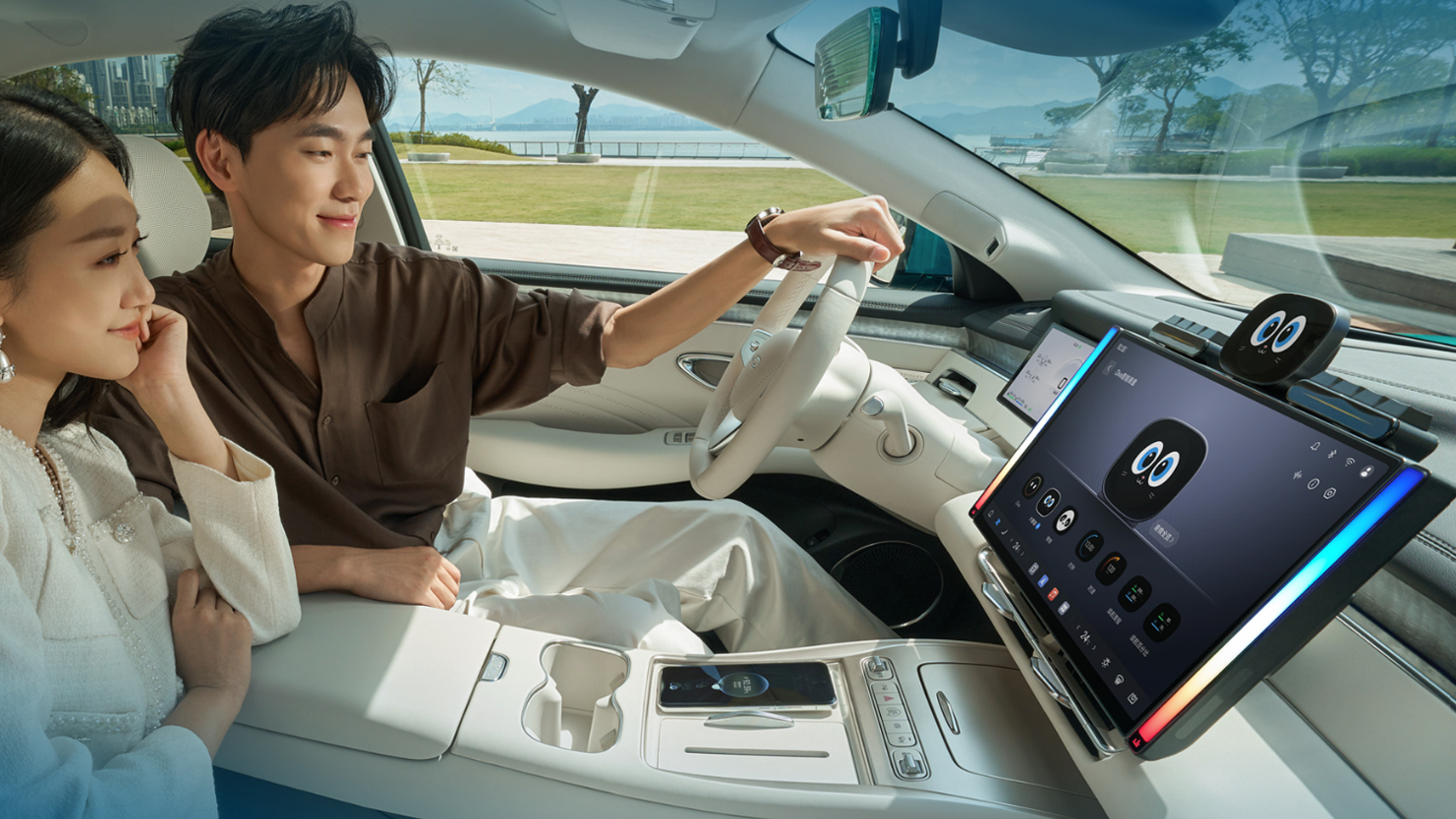
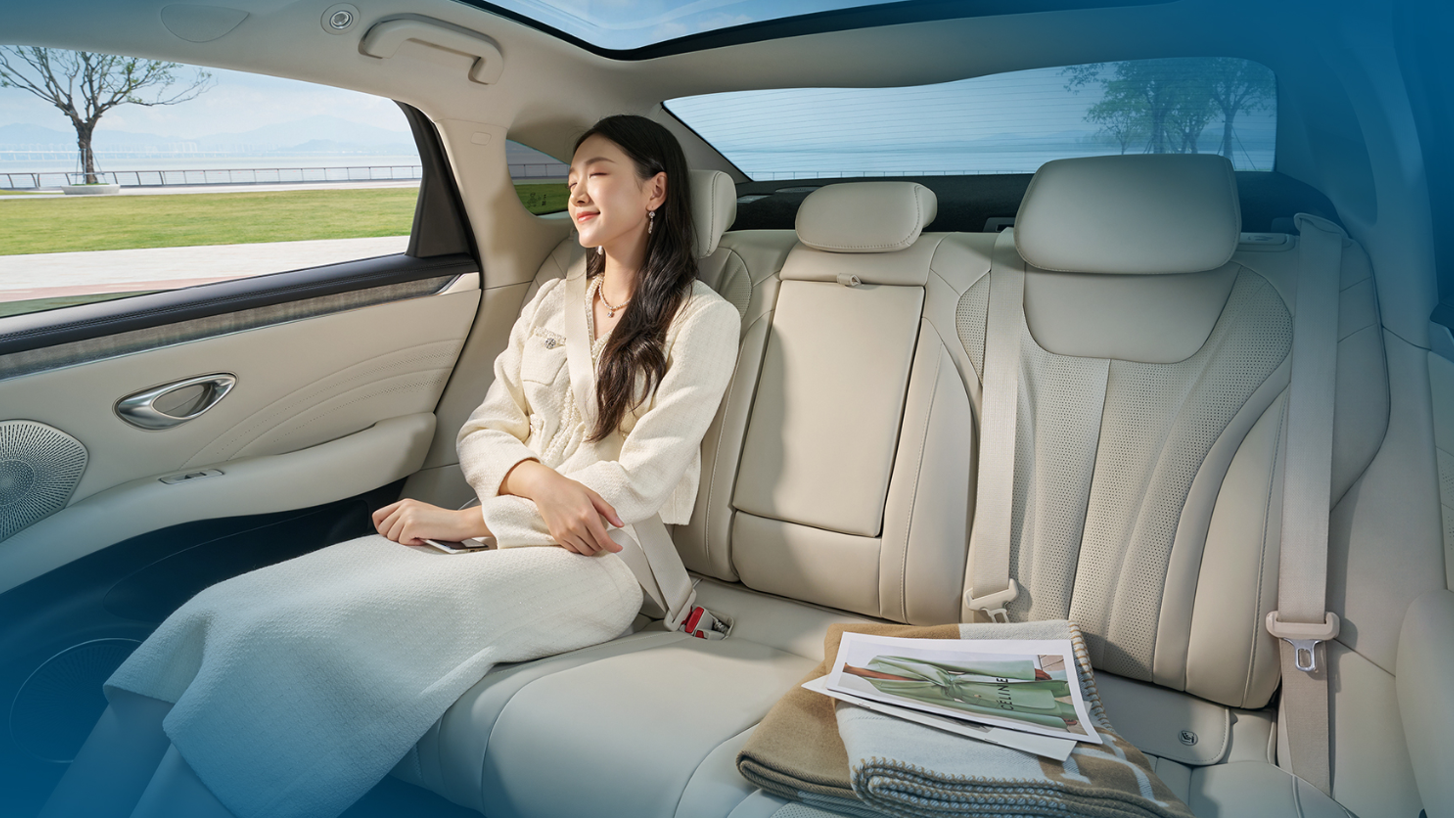
The cabin adds features that were once more associated with higher-priced cars. Front seats offer heating, ventilation and massage, with a “zero gravity” design. Buyers can also get a refrigerator in the center console and a powered roof sunshade. BYD has added speakers, improved the displays and voice controls, and made programmable buttons available.
Driver assistance differs by trim. The basic version includes BYD’s God’s Eye C system, which covers automated parking. Higher trims add LiDAR-based God’s Eye B and city navigation assistance. The range of equipment means the car can be configured from a relatively simple version to one with more advanced sensing and cabin features.

The suspension also varies by trim. Lower versions use DiSus-C adaptive damping; higher ones get DiSus-M magnetorheological active dampers. Both use double wishbones at the front and a multilink arrangement at the rear. That hardware gives BYD different ways to tune ride and handling across the range.
Charging and efficiency reshape the comparison
BYD says its flash-charging system can take the battery from 10% to 70% in five minutes, or from 10% to 97% in nine minutes. At minus 30°C, the stated time from 10% to 97% is 12 minutes without preconditioning. BYD plans to have 20,000 flash-charging stations operating by the end of the year. The prior Seal’s cited charging time was 26 minutes to go from 30% to 80%, a different charging interval that still gives a sense of the claimed change.
Battery capacity falls from 82.5 kWh in the comparable earlier model to 76.4 kWh in the Seal 07. Yet its stated CLTC range rises from 700 km to 775 km. The source attributes the improvement to efficiency. Output increases from 230 kW to 245 kW, or 329 horsepower, while curb weight drops from 2,055 kg to 1,975 kg. BYD also uses more ultra-high-strength steel in the structure.


These figures suggest a broad redesign rather than a simple equipment refresh: the car grows, sheds weight, gains power and travels farther on a smaller battery. The range figure uses China’s CLTC test cycle, so direct comparisons with estimates measured on other cycles require care. The battery chemistry matters for daily use, too. The Seal 07 uses BYD’s second-generation Blade battery, based on lithium iron phosphate (LFP), which the source contrasts with the ternary chemistry used in the Tesla Long Range RWD and says can regularly be charged to 100%.
A lower entry price, with many nearby choices
The price change is striking. In 2022, the earlier Seal’s 550 km version started at 209,800 RMB, given as US$31,424 at current exchange rates. The 700 km version most comparable to the Seal 07 began at 259,800 RMB, or US$38,913. The new model starts at 149,900 RMB (US$22,437) with 775 km of stated range. An extra 10,000 RMB (US$1,498) buys God’s Eye C; the top version, with LiDAR-based God’s Eye B, costs 184,900 RMB (US$27,694). Launch discounts and added perks were also offered. There is no all-wheel-drive version; other BYD models fill that role in China.

Against the standard rear-wheel-drive Tesla Model 3 in China, the Seal 07 is longer, more powerful and more extensively equipped, with a higher stated CLTC range. The Model 3 is 4,720 mm long and lists 634 km of range, falling to 612 km with optional 19-inch wheels. Its starting price is 225,500 RMB. Paint and interior choices add cost, while driver-assistance packages add 32,000 RMB for a system described as roughly comparable to God’s Eye C, or 64,000 RMB for Tesla Driver Assist, likened to God’s Eye B.
Adding options to the standard Model 3 brings its price to 307,500 RMB (US$46,057), according to the comparison, while still leaving it with less range and power and a smaller body than the top Seal 07. The Long Range RWD version reaches 800 km on 19-inch wheels, but the comparison says its ternary battery is not recommended for routine charging to 100%. With paint, those wheels and Driver Assist, its listed price is 331,500 RMB (US$49,652).
BYD’s own expanding catalogue complicates the matchup. The 4,870 mm Seal 06, at 119,900 to 159,900 RMB, is closer in size to the standard Model 3. The larger Seal 08, at 5,150 mm, adds range, power and amenities, with prices from 196,900 to 239,900 RMB. The sportier Fang Cheng Bao Formula S measures 5,060 mm and costs 189,900 to 229,900 RMB. For a more luxurious option, the Denza Z9S is priced from 255,800 to 325,800 RMB. BYD also sells Han and Qin sedans, along with plug-in hybrid versions. None of these models existed when the original Seal launched.

Beyond BYD and Tesla, the Seal 07 lands between XPENG’s Mona M03 and Next P7, below Xiaomi’s SU7, and below the Zeekr 7X and Nio ET5 in the source’s market comparison. Its size, equipment and price give it a distinct place between entry sedans and pricier models. That positioning would be harder to sustain at the earlier Seal’s starting price.
Choice brings a harder sales picture
BYD no longer asks one Seal to serve as many kinds of buyer. Related models can target distinct preferences, from lower prices to more space, luxury or sportiness. That can spread sales across several nameplates and make one-model comparisons less revealing. Buyers get more tailored options, though, and a clearer picture of BYD’s sedan business may take time to emerge as deliveries shift between outgoing and new models.
The Seal 07 and two other new Seal models are not yet available outside China. BYD has often brought older models to export markets after newer versions have arrived at home, and overseas prices can carry a substantial premium. The article points to the Denza Z9GT as an example. XPENG, by comparison, has been introducing its latest models in international markets.
There are signs that export pricing could shift. Some cars with flash charging are beginning to reach overseas buyers, and BYD’s Seagull, sold as the ATTO 1 in Australia, recently had a listed price of A$19,990 (US$13,752). The source describes that as a substantial cut to the usual export markup. Whether BYD brings newer, more capable cars abroad at more competitive prices remains an open question.
The US comparisons show the scale of the price gap, though these are different markets and model configurations. The least expensive car of any powertrain cited in the source is the gasoline Kia K4 at US$23,535, above the Seal 07’s converted base price. The least expensive electric car cited is the soon-to-be-discontinued Chevrolet Bolt at US$28,995, more than the top Seal 07’s converted price. The Tesla Model 3, identified as the least expensive electric sedan in the US, starts at US$38,630 including destination and fees. The source also notes that several other electric models were canceled.
The clearest takeaway is what the Seal 07 combines in its home market: more room, equipment, power and range than its predecessor, with claimed faster charging and a much lower entry price. Its success will depend in part on how it stands out among China’s widening range of capable sedans, and on whether BYD makes the latest version available to drivers abroad at a similar value.